
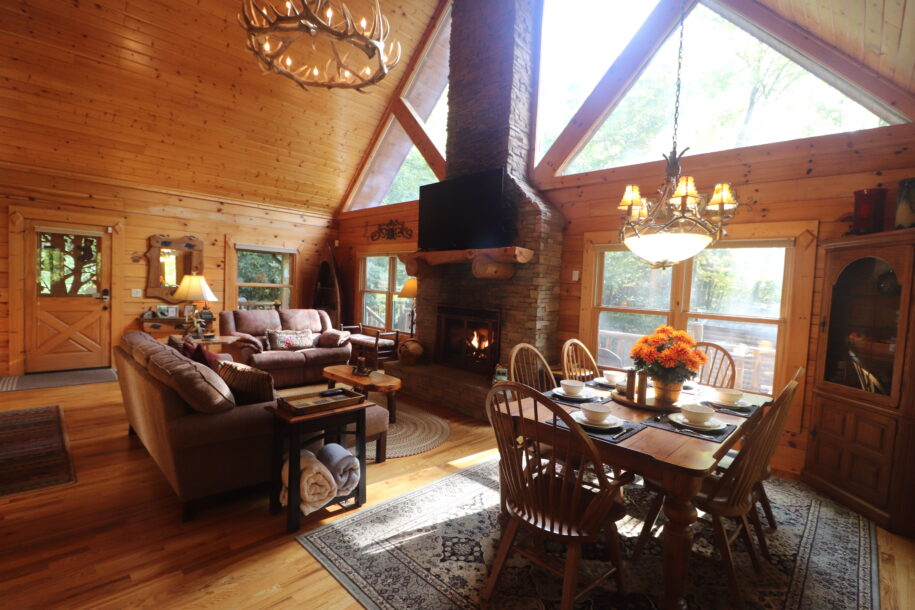
The best time to visit Maggie Valley, North Carolina depends on the kind of mountain vacation you want. Spring is excellent for waterfalls, wildflowers and fresh green scenery. Summer offers long days for hiking, scenic drives and family activities. Fall is the headline season for foliage, cool evenings and elk viewing. Winter is quieter and works especially well for travelers who enjoy skiing, fireplaces, hot tubs and a slower cabin-centered getaway.
There really isn’t one bad season to visit Maggie Valley. The better question is: Which season best matches the trip you want to take?
At High Hopes Cabin, our approximately 4,000-foot elevation also gives guests a firsthand reminder of how much elevation matters in the North Carolina mountains. Conditions at the cabin, in Maggie Valley, on the Blue Ridge Parkway and at lower elevations can be noticeably different on the same day.
This guide will help you choose the right season—and plan around the realities of mountain weather once you arrive.
Maggie Valley Seasons at a Glance
🌸 Spring
Best for: Waterfalls, wildflowers, couples and photography
What to expect: Fresh green scenery, stronger waterfall flow and changing mountain weather.
☀️ Summer
Best for: Families, hiking, scenic drives and longer itineraries
What to expect: Long daylight hours, full outdoor days and occasional afternoon storms.
🍂 Fall
Best for: Fall foliage, photography, elk viewing and romantic trips
What to expect: Cool weather, changing color by elevation and heavier traffic on popular scenic roads.
❄️ Winter
Best for: Couples, skiing, quiet getaways and cabin time
What to expect: Fewer crowds, possible snow and ice, changing Blue Ridge Parkway access and more time around the fireplace and hot tub.
—
Spring in Maggie Valley: Waterfalls, Wildflowers and Fresh Green
Spring is one of our favorite seasons for travelers who want to see Western North Carolina coming back to life.
The forest gradually turns green, mountain streams become more active, and waterfalls can be particularly impressive after periods of rain. Great Smoky Mountains National Park is famous for its wildflower diversity and recommends several North Carolina-side trails for spring wildflower viewing, including the Oconaluftee River Trail and Deep Creek Trail.
If waterfalls are a priority, use our guide to the 15 Best Waterfalls Near Maggie Valley, NC to group nearby falls into practical day trips from High Hopes Cabin.
What Spring Is Really Like in the Mountains
Spring doesn’t arrive everywhere at once.
Lower elevations can feel comfortably springlike while higher sections of the Blue Ridge Parkway remain considerably colder. Some Parkway facilities are seasonal, and road sections can temporarily close because of weather, maintenance or other conditions.
That elevation difference is part of what makes spring interesting. You may see bright green growth in the valley while the highest ridgelines still look like they’re transitioning out of winter.
Best Spring Activities
Spring works especially well for:
- Waterfall trips
- Wildflower walks
- Great Smoky Mountains National Park
- Scenic drives when roads are open
- Photography
- Romantic cabin getaways
- Lower-elevation hiking
Mountain View Getaways Spring Tip
Don’t build your entire spring itinerary around high-elevation driving.
Have one lower-elevation alternative ready. If clouds, fog or a temporary closure make a Parkway day less appealing, switch to waterfalls, Cherokee, Oconaluftee, a local attraction or a relaxed cabin afternoon.
Best for: waterfalls, wildflowers, couples, photographers and travelers who enjoy a quieter mountain trip.
Summer in Maggie Valley: Long Days and Outdoor Variety
Summer gives you the greatest amount of daylight and makes it easier to combine several types of activities during one vacation.
Start early for hiking, waterfalls or Great Smoky Mountains National Park. Use the middle or later part of the day for a scenic drive, local attraction, meal or cabin break.
The Blue Ridge Parkway is a natural summer destination for scenic driving, hiking, picnicking and photography. High-elevation locations such as Waterrock Knob can feel considerably cooler than lower elevations, so keeping a light layer in the car is useful even during warmer months.
Why Families Often Prefer Summer
Families generally have the widest selection of activities during summer.
You can mix:
- Hiking
- Waterfalls
- Blue Ridge Parkway drives
- Great Smoky Mountains National Park
- Mini golf and family attractions
- Festivals and events
- Cherokee
- Bryson City
- Day trips
- Relaxed evenings at the cabin
For a broader overview, see our Ultimate Guide to Maggie Valley, NC.
Watch the Afternoon Weather
Summer mountain weather deserves flexibility.
A beautiful morning can turn into an afternoon shower or thunderstorm. Rather than letting that ruin the day, schedule the activity that depends most on clear weather earlier and keep an indoor, lower-elevation or cabin-centered backup plan.
At High Hopes Cabin, a weather break can simply become time by the stream, a movie or a chance to slow down before heading back out.
Best for: families, hiking, longer itineraries, outdoor recreation and travelers who want the broadest range of activities.
Fall in Maggie Valley: Foliage, Elk and Peak Mountain Atmosphere
Fall is the season many travelers picture when they imagine Maggie Valley.
Cooler temperatures, changing leaves, mountain views, scenic drives and evenings by the fireplace make autumn especially appealing.
But there’s one important thing to understand:
There is no single guaranteed peak-foliage date for the entire Maggie Valley area.
Fall color changes with elevation, temperature, rainfall and weather patterns. Great Smoky Mountains National Park notes that weather influences peak timing, with lower-elevation color often developing later in October.
Elevation Is Your Advantage
One of the best things about staying in this part of Western North Carolina is the range of elevations you can explore.
High Hopes Cabin sits at approximately 4,000 feet, while Waterrock Knob reaches about 5,820 feet. Maggie Valley itself and surrounding roads include still more elevation changes.
That gives you options.
Instead of looking for one magical “peak weekend,” think of fall color as moving through the mountains over time. A drive along the Blue Ridge Parkway and other scenic routes, including US-276 and US-441, can reveal noticeably different stages of color as elevation changes.
We’ve enjoyed spectacular fall scenery on the Parkway and on the mountain highways we use simply getting from one place to another.
Fall Is Also Elk Season
Autumn adds another major attraction: elk.
Great Smoky Mountains National Park identifies Cataloochee and Oconaluftee among the important elk-viewing areas on the North Carolina side of the park. Early morning and late evening are generally the best viewing periods.
During the fall rut, give elk substantial space and follow National Park Service wildlife guidance. These are large, wild animals—not roadside photo props.
Why Fall Works So Well for Couples
Fall naturally lends itself to romantic trips.
Spend the day exploring foliage or watching elk, then come back to High Hopes Cabin for the stone gas fireplace, private hot tub or smokeless fire pit.
Just remember that beautiful weather and fall color attract other visitors too. Build extra time into scenic-drive days, especially on popular October weekends.
Best for: foliage, photography, scenic drives, elk viewing, couples and romantic mountain getaways.
Winter in Maggie Valley: Snow, Skiing and Cozy Cabin Time
Winter is Maggie Valley’s most flexible season.
It can also be one of its most relaxing.
High-elevation roads can close because of snow, ice or maintenance, and conditions on the Blue Ridge Parkway may be dramatically different from those in the valley. The National Park Service specifically recommends checking Parkway road status before winter travel.
That doesn’t mean winter is a poor time to visit. It means you should plan a different kind of trip.
Make the Cabin Part of the Vacation
Winter works especially well when your lodging is an experience rather than simply somewhere to sleep.
At High Hopes Cabin, winter can mean the indoor stone gas fireplace, a private hot tub in the cold mountain air, time around the smokeless fire pit when conditions allow, movies, cooking and a slower pace. If those features are important to your trip, see our Smoky Mountain Cabin With a Fireplace and Hot Tub guide.
We’ve seen snow at the cabin over the years, but no responsible mountain guide should promise snow—or promise that roads will always be clear. Conditions vary from storm to storm, so guests should check forecasts and current road conditions before traveling.
High Hopes Cabin is also close to Cataloochee Ski Area, making skiing and winter recreation natural additions when conditions and operating schedules cooperate.
Best for: couples, skiing, cozy getaways, winter scenery and travelers comfortable changing plans with the weather.
Best Time to Visit Maggie Valley Month by Month
Seasonal descriptions are useful, but sometimes travelers want to know what a particular month generally means.
Rather than promising exact weather or foliage conditions, use these months as broad planning windows.
March
March is a transition month. Lower elevations may begin looking like spring while higher elevations can still experience winter conditions.
Best approach: waterfalls, lower-elevation exploration and a flexible itinerary.
April
Spring becomes more noticeable, wildflowers emerge and the forest begins changing rapidly.
Higher-elevation road access can still vary, so check conditions before making the Parkway the centerpiece of your day.
May
May is an excellent all-around month for green landscapes, waterfalls, wildflowers and increasingly reliable outdoor days.
It can be a particularly good choice for travelers who want spring scenery without planning around fall crowds.
June
June brings long days and a wide range of outdoor possibilities.
It’s well suited to hiking, waterfalls, scenic drives and combining Maggie Valley with nearby destinations.
July
July works particularly well for family vacations and full outdoor itineraries.
Start major outdoor activities earlier when possible and keep afternoon weather in mind.
August
August still offers a broad summer activity mix.
Early starts can make hiking and outdoor sightseeing more comfortable, while higher elevations provide opportunities to escape some of the lower-elevation heat.
September
September often begins the transition toward fall without requiring a foliage-focused itinerary.
It can be a useful month for travelers who want outdoor activities and the first hints of seasonal change.
October
October is the headline foliage month, but don’t build a trip around one supposedly guaranteed “peak” date.
Use elevation to your advantage and explore different areas as conditions change.
November
November becomes quieter and increasingly winterlike at higher elevations.
It can be an appealing time for couples and travelers who value a slower trip, but Parkway facilities and road access become more seasonal.
December
December shifts the focus toward winter recreation, holiday atmosphere and cabin time.
Check weather and road conditions frequently rather than assuming that conditions at one elevation apply everywhere.
January
January is one of the most cabin-centered months.
Skiing, winter scenery, hot-tub evenings and fireplace time can become the main attractions rather than a packed sightseeing schedule.
February
February remains a winter month in the mountains, but changing weather can create very different experiences from one visit to another.
Keep plans flexible and treat clear-weather windows as opportunities.
Which Season Is Best for You?
Best Time for Couples
Fall and winter are obvious choices for couples because cool evenings, foliage, fireplaces and hot tubs naturally fit a romantic getaway.
But don’t overlook spring. Waterfalls, fresh greenery and quieter travel periods can make spring equally appealing.
If you’re planning a couples trip, our Romantic North Carolina Mountain Cabin With a Hot Tub guide offers more ideas for building a relaxing mountain getaway around the experience you want.
Best Time for Families
Summer is usually the easiest season for families because of the long daylight hours and broad activity selection.
Fall can also be excellent, but families should allow more time for scenic-road traffic during popular foliage weekends.
Best Time for Waterfalls
Spring and periods following adequate rainfall can produce particularly impressive waterfall conditions.
Waterfall areas can also become muddy, slick or hazardous after rain, so stronger flow should never be treated as an invitation to climb wet rocks or leave designated viewing areas.
Use our Maggie Valley waterfall guide to plan waterfall outings by location.
Best Time for Wildflowers
Spring is the headline wildflower season. Great Smoky Mountains National Park is exceptionally diverse botanically, with more than 1,500 kinds of flowering plants documented in the park.
The National Park Service wildflower guide is a useful resource when planning a spring trip.
Best Time for the Blue Ridge Parkway
Late spring through fall generally gives travelers the broadest opportunity to use the Parkway, but current road status matters more than the date on the calendar.
Weather, construction, maintenance and emergency events can all affect access.
Check the official Blue Ridge Parkway road status and closures shortly before your drive.
Best Time to See Elk
Elk can be seen during different parts of the year, but fall is particularly dramatic because of the rut.
For viewing at any time of year, early morning and late evening are generally the most productive periods.
See the National Park Service elk information before visiting.
Best Time for Skiing
Winter is the natural choice.
Check Cataloochee Ski Area directly for current operating information and conditions before building a day around skiing or snow activities.
Best Time for Fewer Crowds
There is no universal “empty” season, because weekends, weather, holidays, festivals and regional events all influence visitation.
As a practical rule, non-holiday weekdays and shoulder-season periods often feel calmer than peak fall weekends and major event periods.
If a specific Maggie Valley event is important to your trip, confirm its current date and schedule before booking around it.
Why Elevation Matters More Than Many Visitors Expect
One of the most important lessons for planning a Maggie Valley vacation is that mountain weather is highly localized.
Waterrock Knob is at approximately 5,820 feet, and the National Park Service notes that weather at this high-elevation Parkway location can be very different from conditions below.
High Hopes Cabin is at approximately 4,000 feet.
Lower-elevation areas may be warmer, clearer or further along seasonally than the cabin or Parkway. This affects:
- Temperature
- Fog and visibility
- Fall-color timing
- Snow and ice
- Wildflower timing
- Road conditions
- What clothing you’ll want during the day
Instead of checking one forecast and assuming it applies everywhere, look at conditions for the specific places you’re visiting.
How We Plan Mountain Days From High Hopes Cabin
Our favorite rule is simple:
Choose one headline experience and one easy secondary activity each day.
Then let the weather help determine the order.
If the morning is crystal clear, use that window for the Parkway or another experience that depends on long-range views.
If clouds obscure the high elevations, move the Parkway to another day and choose waterfalls, Cherokee, Oconaluftee, Wheels Through Time, a meal in town or cabin time instead.
If everyone is tired after a hike, skip the extra attraction.
Mountain vacations become much more enjoyable when the itinerary responds to the mountains rather than trying to force the mountains to follow the itinerary.
What to Do When the Weather Changes
If You Have Only a Morning
Use the clearest weather window for the experience that depends most on visibility.
That often means Waterrock Knob, a Parkway overlook or a short outdoor walk.
Keep the route compact enough that you aren’t spending most of your available time in the car.
If You Have a Full Day
Group places that naturally sit in the same direction.
One meaningful outdoor destination, a meal or picnic and one secondary stop is often enough.
Our Ultimate Guide to Maggie Valley can help you see how the area’s major attractions fit together geographically.
If Weather Changes Midday
Don’t assume the day is ruined.
Move from a high-elevation drive to a local attraction, restaurant, shopping stop or cabin break.
If conditions improve later, use the new weather window for a shorter scenic outing rather than trying to recreate the original full-day schedule.
If Your Group Has Different Activity Levels
Choose destinations where everyone can share the primary experience without completing the same hike.
Waterrock Knob and Oconaluftee are examples of places where some travelers can enjoy the main visitor area or scenery while others add a walk.
Frequently Asked Questions About the Best Time to Visit Maggie Valley
What is the best month to visit Maggie Valley, NC?
There isn’t one best month for everyone. May and June work well for green scenery and outdoor exploration; summer is easiest for families and longer itineraries; October is popular for foliage; and winter works well for skiing and cabin-centered getaways.
Choose based on the experience you want rather than chasing one supposedly perfect date.
When is fall color best in Maggie Valley?
There is no guaranteed peak date because color depends on elevation and weather.
October is the major foliage month, but color develops differently across elevations. The ability to move between Maggie Valley, High Hopes Cabin, the Blue Ridge Parkway and surrounding mountain roads gives visitors several elevations to explore.
Does Maggie Valley get snow?
Yes, winter weather can bring snow and ice to Maggie Valley and the surrounding mountains, particularly at higher elevations.
High Hopes Cabin sits at approximately 4,000 feet and we have experienced snow there over the years. However, snowfall, accumulation and road conditions vary considerably from one storm to another. Always check current conditions rather than planning around a guarantee of snow.
Can you visit Maggie Valley year-round?
Yes.
Maggie Valley is a year-round destination, but the best itinerary changes with the season. Spring might revolve around waterfalls and wildflowers; summer around outdoor exploration; fall around foliage and elk; and winter around skiing, scenic winter weather and cabin time.
When is Maggie Valley least crowded?
Crowds vary with weather, holidays, festivals and foliage conditions.
For a generally quieter experience, consider weekdays outside major holiday and peak-foliage periods.
Is the Blue Ridge Parkway open year-round?
The Parkway itself does not operate like an attraction with one simple seasonal opening date, but individual sections can close because of weather, construction, maintenance or emergency conditions, and many facilities are seasonal.
Always check the official NPS Parkway road-status page before your drive.
What should I check immediately before my Maggie Valley trip?
Confirm:
- Blue Ridge Parkway road status
- Great Smoky Mountains National Park alerts
- Local and high-elevation weather
- Trail conditions
- Attraction hours
- Restaurant hours
- Ski-area conditions in winter
- Festival and event schedules that matter to your itinerary
The closer you get to your travel date, the more useful current conditions become.
Our Favorite Part About Maggie Valley: Every Season Feels Different
One reason we enjoy High Hopes Cabin is that the same porch and mountain setting can feel completely different throughout the year.
Spring brings fresh growth and active streams. Summer fills the mountainside with deep green. Fall transforms the ridges with changing color. Winter makes the fireplace, hot tub and quiet mountain atmosphere part of the destination.
We’ve written more about that experience in The Same Porch, Four Different Views: A Year at High Hopes Cabin.
Choose the Maggie Valley Season That Fits Your Trip
The best time to visit Maggie Valley isn’t necessarily the month with the warmest weather or the weekend someone predicts will have “peak” foliage.
It’s the season that matches what you want to experience.
Choose spring for waterfalls and wildflowers.
Choose summer for long outdoor days and family adventures.
Choose fall for foliage, elk and cool mountain evenings.
Choose winter for skiing, quiet roads and a cabin-centered getaway.
Then leave some flexibility in the schedule.
High Hopes Cabin by Mountain View Getaways is a true log cabin at approximately 4,000 feet in Maggie Valley, with mountain views, a stream beside the porch, private hot tub, smokeless outdoor fire pit and stone gas fireplace.
Use it as your home base for the Blue Ridge Parkway, Great Smoky Mountains National Park, Cataloochee, Cherokee, waterfalls and Western North Carolina—then leave enough time to come back and enjoy the cabin itself.
Explore High Hopes Cabin and start planning your Maggie Valley stay.